 Michael Turner
 Key Takeaways
- The 790-series Kenmore wall oven is built on the Frigidaire and Electrolux platform, with good parts availability for repair.
- F30 and F31 are temperature sensor faults, usually a probe or harness repair, and the oven simply will not heat.
- F14, and sometimes F10 and F11, point to the control board, and the oven should not be used for cooking while F14 or F10 shows.
- Sensors, latch motors and keypads are worth repairing at almost any age, while the board decision tightens past about 12 years, more slowly for a built-in.
- Kenmore Elite 790.9 ovens use an LG platform with different codes, so read the model prefix first.
The Bottom Line
Most 790-series codes are worth fixing, and the sensor codes are the cheapest of them. Treat F10 and F14 as diagnose-first faults, and let the oven age decide the board question.
| Code | What it reports | Safe to use? | Usually worth fixing? |
|---|---|---|---|
| F30 | Temperature sensor open circuit | Won't heat, so no risk | Yes, the probe is the common cause |
| F31 | Temperature sensor short circuit | Won't heat; do not reset and use | Yes, sensor or harness repair |
| F90 | Door latch motor failure | Bake and broil, if only self-clean fails | Yes, if you use self-clean |
| F11 | Shorted keypad key | Locked out until reset | Often a cleaning job first |
| F14 | EEPROM memory fault | No cooking while it shows | Board repair, so age decides |
| F10 | Runaway oven temperature | Do not operate | Yes, but diagnose before judging |
Is a Kenmore 790-Series Wall Oven Worth Fixing?
Usually yes, because the common faults are inexpensive, the parts supply is good, and a built-in wall oven is expensive to replace. This site's guide to Kenmore ovens rates the Frigidaire 790 platform as having excellent parts availability, with repair outlook favorable under 17 years for electric ovens and under 15 for gas. A control board repair from $350 is worth doing on an oven under 12 years old, and worth weighing carefully beyond that. The wall-oven setting adds weight. A built-in unit sits in a cutout, and a replacement that is even slightly different in size means cabinet work on top of the oven. That is why the guide sets a higher repair threshold for built-in ovens than for a freestanding range. Our is it worth repairing a Kenmore oven guide is the parent of this page, and this one narrows it to the 790 codes.Which 790-Series Codes Are Usually Cheap to Fix?
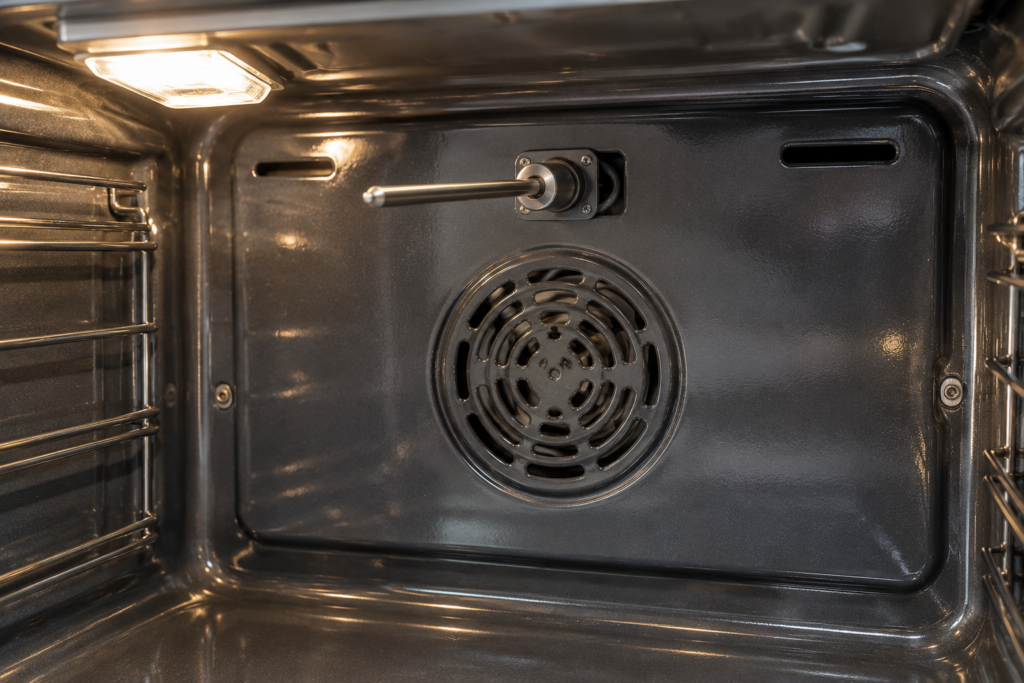
F30 and F31, the two temperature sensor codes, are the most favorable. Both leave the oven unable to heat, because the board has no sensor feedback and shuts the elements off, and both trace to the same slender probe at the upper rear of the cavity or its two-wire harness. F30 means an open circuit, usually a broken probe from years of heat cycling, and the site calls it a straightforward repair.- F30, no preheat at all — the setpoint sits frozen on the display and the preheat tone never plays.
- F31, a reading like 999°F on the display — the sensor wires have shorted to each other or to the probe body.
- A pinched harness — a conductor squeezed between the cavity wall and a rack guide can short without the probe failing.
- Moisture in the connector — condensation can create a short that clears when the connector dries.
The Codes That Point at the Control Board
F14, and sometimes F10 and F11, are the codes that lead to the electronic oven control. F14 is an EEPROM memory fault, which means the board cannot hold its settings, so calibration offsets and the clock reset themselves and cooking temperature cannot be trusted. The site advises against using the oven for any cooking while F14 shows, because inaccurate temperature control is a food-safety and fire risk.- F14 on an older oven — the memory chip may simply have worn out from write cycles.
- F14 after a storm — a surge can corrupt the data, and a reset occasionally restores it if the chip is intact.
- F11 that does not clear with cleaning — a damaged keypad membrane, or rarely the board's key-scan circuit.
- F10, runaway temperature — a shorted bake or broil relay is the most common hardware cause, and the oven must not be run until it is found.
What a Diagnostic Settles Before You Decide
Several 790 codes look alike from the outside, and the worth question is only answerable once the cause is known. F30 and F31 can come from the probe, from its harness or, rarely, from the sensor input on the board, and the three have very different prices. A technician separates them by measuring the probe and the wiring, and only then looks at the board. The same applies to F11, where a sticky key and a dead membrane look the same until the panel is cleaned.- Probe first — a broken or shorted sensor is the cheap answer to both F30 and F31.
- Harness second — a pinched or loose wire mimics a failed probe.
- Board last — it is confirmed only after the sensor and the wiring are both verified good.
Does the Age of the Oven Change the Answer?
Yes, but mostly for the board codes. This site's age and repair-cost matrix for Kenmore ovens treats sensor and element repairs as repair at almost every age, and puts the real hesitation on the control board. For a built-in wall oven the matrix stays on the side of repair longer than for a freestanding range, because replacing a built-in costs more than the oven.- Under 8 years — always repair sensor and element faults, and repair a board.
- 8 to 16 years — repair sensors, latches and keypads, and repair a board under 12 years while evaluating an older one.
- 16 to 20 years — sensors still get repaired, and for a built-in the board is still worth repairing.
- Over 20 years — repair critical faults, and evaluate everything else against the cost of replacing a built-in oven.