 Michael Turner
 Key Takeaways
- A Kenmore dryer heating element replacement starts from $130 on this site: parts from $20 and labor from $100.
- A thermal fuse from $100, a thermostat from $110 and half a breaker (the L2 code) cause the same no-heat symptom, so the cause is tested before the part is ordered.
- A multimeter reading with no continuity across the element terminals confirms a failed element, and replacement is a professional job.
- A restricted vent shortens element life dramatically, so the vent is inspected in the same visit.
- A new Kenmore electric dryer starts from $500, so an element repair is well inside the 50 percent threshold on most units under 12 years old.
The Bottom Line
A heating element from $130 is a sensible repair on most Kenmore electric dryers, but only after the thermal fuse, the breaker and the vent have been ruled out. Book a diagnosis instead of ordering parts on a guess.
A Kenmore dryer heating element replacement cost starts from $130 on this site, and that figure covers the part, the labor and the rear-panel work needed to reach it. It is one of the three or four repairs that explain most no-heat calls on a Kenmore electric dryer, and it is the one most often ordered on a guess. The drum tumbles, the clothes come out cold and damp, and the element gets the blame, when a cheaper part upstream, a blown thermal fuse or half a breaker, may be the real culprit. This guide prices the element and shows how to avoid paying for the wrong part.
| No-heat repair on a Kenmore dryer | What it fixes | Starting total |
|---|---|---|
| Thermal fuse | Drum tumbles, no heat, after a restricted vent | from $100 |
| High-limit or cycling thermostat | Heat cuts out or never reaches temperature | from $110 |
| Heating element (electric) | Open element, no heat on any cycle | from $130 |
| Gas valve coil or solenoid (gas) | Gas dryer that tumbles with no ignition | from $140 |
| Control board | No operation, or the board will not switch the heat | from $205 |
How Much Does a Kenmore Dryer Heating Element Replacement Cost?
From $130 all in on an electric Kenmore dryer, with the final cost confirmed after a technician completes an on-site diagnosis. The site's cost guide breaks that into parts from $20 and labor from $100, which is a little more labor than the simpler dryer repairs because the element sits in a housing at the rear of the cabinet. We give a written estimate before any work begins.
The parts story is the reassuring half. Heating elements, thermal fuses, belts and thermostats are stocked by every major parts retailer on the Whirlpool-platform Kenmores the site describes, which keeps the part itself inexpensive. The labor is the part that moves with the model, because the site notes that access varies and some units need near-complete disassembly.
How Do You Know It Is the Element and Not the Fuse?
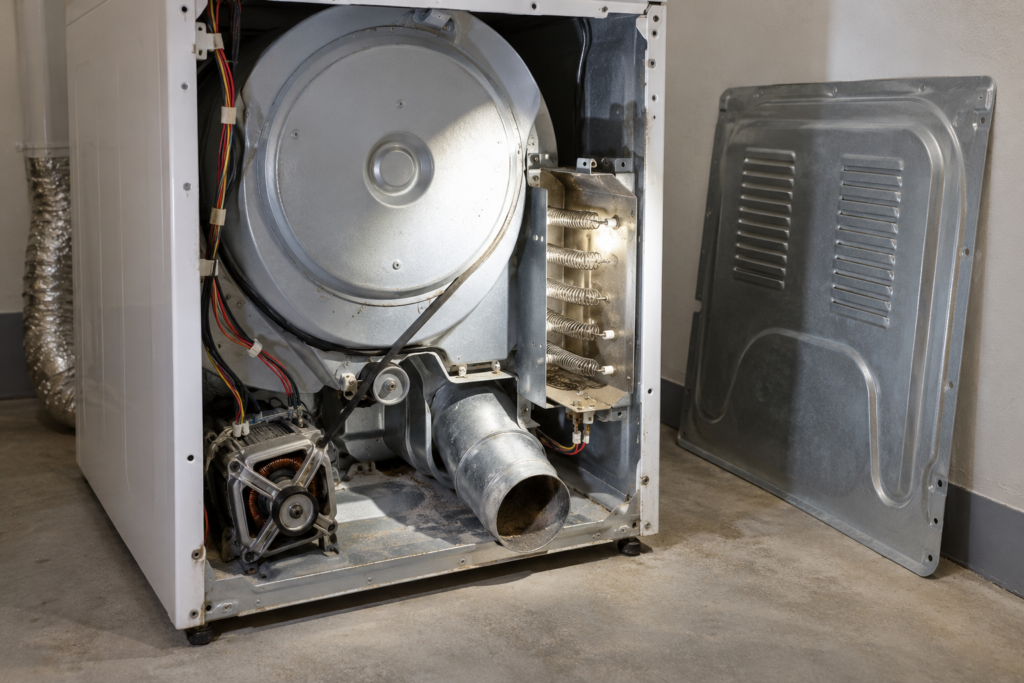
By testing, not by symptoms, because the symptoms are identical. A dryer that tumbles with no heat can have a blown thermal fuse, an open element or a dead leg of the 240-volt supply, and each shows the same cold clothes. Our Kenmore dryer not heating guide explains that the element is a coil of nichrome wire in a metal housing, and that a multimeter reading across its two terminals with no continuity confirms it has failed.
- Test the supply first — if the display shows L2, one leg of the breaker or the wiring is the problem, and the element is fine. Our dryer L2 page covers it.
- Test the thermal fuse — no continuity means it blew, usually because the vent was restricted, and it costs from $100 to replace with a vent inspection.
- Test the element — an open reading across its terminals confirms it. Replacement is a professional job because it needs rear-panel removal and careful reassembly.
- Check the code — the site lists no dedicated code for a failed element, while dryer F22 and AF point at the exhaust sensor and airflow.
Does a Restricted Vent Kill the Heating Element?
It shortens its life dramatically, though an element can also simply wear out. The site says a heating element can fail from age and thermal cycling independently of the vent, but a restricted vent shortens its lifespan sharply, and the thermal fuse is the usual first casualty. That is why a new element installed into a clogged duct is money at risk: the same restriction that cooked the old one will cook the new one.
The practical rule is the one the site's own technicians follow, which is to inspect the vent in the same visit and clean it if needed. Our Kenmore front-load dryer vent cleaning guide explains how, and the dryer AF page is the code that flags a restriction before it becomes a repair bill.
Is a Heating Element Worth Replacing on an Older Kenmore Dryer?
Yes on most units under 12 years old, because the repair is a small share of what a replacement costs. The site puts a new Kenmore electric dryer from $500, with installation adding from $75, and applies a 50 percent threshold, so a repair makes sense while it costs well under half of that. An element from $130 is about a quarter of the price of the cheapest new dryer, and it is a long way from the motor at from $250, which is where the site says the decision starts to bite.
Age changes the picture only when the dryer needs more than one repair. Our is it worth repairing a Kenmore dryer and Kenmore dryer repair or replace guides cover that, and our Kenmore dryer repair cost page lists every other dryer part.
What the Repair Visit Includes
The visit begins with a diagnosis, because the same symptom can come from several parts. Our technicians test the fuse, the thermostats and the element before recommending any replacement, and they inspect the vent for restrictions before they give a written estimate. Gas dryers have no element at all and get an igniter and flame sensor check instead, and gas repairs are always handled by a professional.
- Vent inspection — included so the new part is not killed by the old restriction.
- Component testing — each suspected part is confirmed before it is quoted.
- A written estimate — parts and labor listed separately, before work begins.
The written estimate comes before any work, so you decide with the numbers in front of you instead of replacing parts on a hunch.
What Else Gets Quoted With an Element
When a dryer is already open at the rear, a technician may point out a second wear part, and the written estimate lists it separately so you can approve or decline it. The usual companions come from the same cost table, each at its own starting price:
- A thermal fuse — from $100, when the vent restriction has already blown it.
- A cycling or high-limit thermostat — from $110, if heat has been cutting out early.
- A drive belt or idler pulley — from $110 each, if the drum has also been noisy or slow.
- A drum bearing or glide — from $140, when a thump comes from the drum.
None is added by default. Each appears only when your symptoms or the tests point to it, and the all-in total stays visible before you agree.
Booking the Repair
A short list of things to do before the visit saves time on the day:
- Check the breaker. Switch the double-pole dryer breaker fully off and on, because one tripped leg gives a tumbling drum and no heat.
- Clean the lint screen and look at the vent. A restricted vent is the most common reason the fuse or element failed.
- Note the display. L2, AF or F22 each point at a different cause.
- Write down gas or electric. A gas dryer has no heating element at all.
Element, fuse, thermostat and igniter work all sit under Kenmore dryer repair. Tell us the model, whether it is gas or electric, any code on the display and what you have already tested. Schedule a visit or contact us, and remember that the final price is confirmed after on-site diagnosis, with a written estimate before any work begins.