 Michael Turner
 Key Takeaways
- A blinking Sanitize light means the final rinse did not reach the 150 degree sanitize threshold, and the dishwasher still cleans normally.
- Incoming hot water of at least 120 degrees Fahrenheit is what lets the heater reach 150 in the rinse, so measure the sink water first.
- Run the hot tap for 60 seconds before a sanitize load, and raise the water heater only in small steps because hot water scalds.
- Holding Heated Dry for five seconds acknowledges the blink on most 665 Ultra Wash models but does not fix the cause.
- A light that blinks on every cycle despite good water points at the heating element or thermistor.
The Bottom Line
Measure the hot water at the sink before suspecting the dishwasher: 120 to 125 degrees Fahrenheit is the target. If the light keeps blinking with good water, book a technician to test the element and thermistor.
Of all the lights on a dishwasher control panel, the Sanitize indicator is the one most people ignore, until it starts blinking. It is also one of the few warnings that is genuinely a maintenance matter rather than a breakdown: the dishwasher cleaned the load, but the board could not confirm that the final rinse reached the temperature the sanitize option promises. On Kenmore 665 Ultra Wash dishwashers that usually comes down to the hot water reaching the machine, not the machine itself, and the fix is a thermometer and a few minutes of routine.
| Check | What the site says to look for | If it is off |
|---|---|---|
| Hot water at the kitchen sink after 60 seconds | 120 to 125 degrees Fahrenheit | Raise the water heater setting modestly, or shorten the supply run |
| Dishes right after the door opens | Too hot to handle comfortably | Only warm means the sanitize rinse was too cool |
| Cycle length | Normal for your cycle | 30 to 60 minutes longer means the board keeps re-heating |
| Blink on every cycle with good water | Should not happen | Heating element or thermistor test |
What Does the Sanitize Light Blinking Mean on a Kenmore Dishwasher?
It means the final rinse did not reach the sanitize temperature of 150 degrees Fahrenheit, the NSF/ANSI 184 threshold the site cites for residential dishwashers. When the Kenmore dishwasher sanitize light blinks at the end of a cycle, the dishes are still clean in the ordinary sense, and the dishwasher has not broken: it is a notification, not a mechanical fault. Our dishwasher Sanitize LED blinks page rates it low severity.
The dishwasher heater boosts incoming hot water, but it needs to start from a reasonable temperature. The site's rule of thumb is that the incoming water should be at least 120 degrees Fahrenheit for the heater to reach 150 reliably in the rinse phase. A water heater set lower, or a long pipe run that loses heat before it reaches the machine, produces the warning on a perfectly healthy dishwasher.
Is It Safe to Keep Using the Dishwasher With the Sanitize Light Blinking?
Yes for everyday cleaning, because the site rates it safe and the dishwasher still washes normally. The sanitize feature only matters in high-risk situations, such as a household member with a weakened immune system or baby items, and in those cases you should not rely on the option until the light stays solid. Stop and have the machine checked if the light blinks on every cycle even though the incoming water is confirmed above 120 degrees Fahrenheit, or if dishes are not hot to the touch right after a sanitize cycle.
How Hot Does the Water Need to Be?
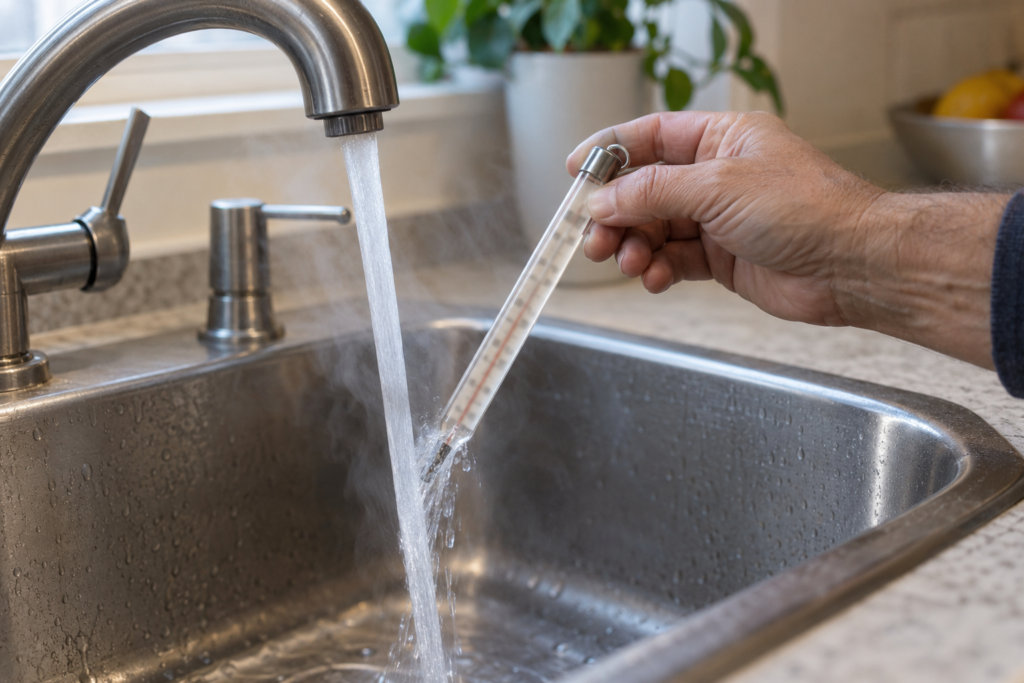
A reading of 120 to 125 degrees Fahrenheit at the kitchen sink is the target, and anything below 115 is the signal to act. The check is simple and costs nothing: run the hot tap for 60 seconds to purge cool water from the supply line, then hold a cooking or candy thermometer under the stream.
- Run the hot tap for 60 seconds so the reading reflects the water the dishwasher will draw.
- Measure with a cooking thermometer and compare with 120 to 125 degrees Fahrenheit.
- Adjust the water heater only a little if the reading is under 115, then measure again.
- Pre-flush before a sanitize load by running the sink hot for a minute, because the first fill uses the hottest water available.
A caution belongs here: hotter household water is a scalding risk, especially around children and older adults. Raise the setting in small steps and stop at the lowest temperature that clears the light. If the heater is set correctly and the reading is still low, the pipe run is the cause.
A Routine That Keeps Sanitize Working
Sanitize depends on the heating system, so the habits that protect the heater and the filter also protect the light. Our Kenmore dishwasher filter maintenance and Kenmore dishwasher maintenance guides cover the general upkeep. The sanitize-specific habits are short:
- Pre-flush the hot line — run the sink hot for a minute before starting a sanitize load.
- Check the water temperature seasonally — a cold season and a long pipe run can pull the incoming water below the threshold.
- Watch the cycle length — a sanitize cycle that runs 30 to 60 minutes long is the board repeatedly trying to heat.
- Do not clear the alert and forget — holding Heated Dry for five seconds acknowledges the blink but does not fix the cause.
Running the Diagnostic Cycle
On Kenmore 665 models that offer it, the site describes a self-test: press Heated Dry, Normal Wash, Heated Dry and Normal Wash in quick succession, and let it run a full wash, heat and drain sequence. If the Sanitize light is solid at the end, the heater works and the incoming water was the variable. If it blinks again, the element or the thermistor needs testing. The sequence differs by model, so check your owner's manual before relying on it.
That test separates the two causes neatly. The next step is a technician measuring the element, which is not a homeowner job.
What Not to Do About a Blinking Sanitize Light
Because the light is a notification, the temptation is either to ignore it for months or to overreact. Neither helps, and a few well-meant responses make things worse:
- Do not turn the water heater up sharply — a large jump can scald, so check the water heater's manual and use small steps with a thermometer.
- Do not rely on the clear-the-alert button — it silences the blink without telling you whether the rinse reached temperature.
- Do not replace the heating element on a guess — the site's own order of causes puts incoming water first and the element second.
- Do not skip sanitize for a baby bottle load — if the light has been blinking, wash those items another way until the cause is found.
The common thread is measurement. A thermometer, a stopwatch for the cycle length and a note of how hot the dishes feel give a technician, or you, the facts to decide on.
When the Element or Thermistor Is the Cause
If the water is hot and the light still blinks, two parts are left. A degraded heating element can still warm the water but not to full temperature, and the site says a technician finds continuity but resistance above 40 ohms. A drifted thermistor reports a temperature 10 to 20 degrees too low, so the board thinks the threshold was missed when it was not, which is rare but produces the same blink. Both sit beside the clean-light fault covered in Kenmore dishwasher clean light 7x repair or replace.
Do not confuse this light with the Clean light blinking seven times, which our dishwasher Clean LED blinks 7x page ties to the heater circuit. That is a fault pattern rather than a temperature notice, and it calls for a technician sooner. If both lights are involved, mention both when you book, because together they point firmly at the heating system.
Book through Kenmore dishwasher repair, and tell us the model, how hot the sink water measured and whether the cycle ran long. Schedule a visit or contact us. The final price is confirmed after on-site diagnosis, with a written estimate before any work begins.