 Michael Turner
Key Takeaways
- Any gas range can produce carbon monoxide through misaligned burners, partly blocked orifices or poor ventilation, recalled or not.
- The warning signs are yellow or orange flames, soot, heavy window condensation and headaches, dizziness or nausea while cooking.
- If a CO alarm sounds, turn the range off, get into fresh air, call emergency services if anyone is unwell and do not use the range until it is checked.
- A combination smoke and CO detector should be tested monthly, have its batteries replaced yearly and be replaced at the end of its rated life.
- The site treats its Kenmore carbon monoxide notice as an advisory, not a recall.
The Bottom Line
A steady blue flame is the sign of a healthy burn. Yellow flames, soot, or symptoms while cooking mean turn the range off, ventilate and book service, and keep a working CO detector near the kitchen.
A gas flame that burns properly produces mostly carbon dioxide and water. A flame that burns badly produces carbon monoxide, a gas with no smell and no color that nobody can detect by sense alone. That is the whole reason this topic gets its own guide. A Kenmore gas range gives you plenty of visible signs that its combustion has gone wrong, in the color of the flame, in soot near the burners and in how you feel while cooking, and a working detector gives you the one signal you cannot see yourself. This guide is about reading those signs, and it is deliberately not about recalls: the question here is the range in your kitchen today.
| What you notice | What it can mean | What to do |
|---|---|---|
| Yellow or orange burner flames instead of steady blue | Incomplete combustion | Turn the range off, ventilate, call service |
| Soot or black marks around burners | Incomplete combustion over time | Stop using the burner, call service |
| Heavy condensation on windows while cooking | Combustion or ventilation problem | Ventilate and have it checked |
| Headache, dizziness or nausea when cooking | Possible carbon monoxide exposure | Get to fresh air, then call service |
| A CO alarm sounds | Carbon monoxide present | Leave, ventilate, do not use the range |
Can a Kenmore Gas Range Produce Carbon Monoxide Without a Recall?
Yes, any gas range can, which is why the advice does not depend on whether your model was ever recalled. This site's own safety notice says carbon monoxide can come from a range that was never part of any recall if its burners are misaligned, its orifices are partly blocked or the kitchen is badly ventilated. The notice is an advisory, not a recall, and it addresses owners of Kenmore PRO and Elite gas models in particular. In short, Kenmore gas range carbon monoxide advice is the same for every owner: look at the flame, keep the burners clean and keep a detector working.
The three causes it names are all maintenance and installation matters rather than defects. A burner cap knocked slightly out of place changes how the flame mixes gas and air. An orifice clogged by spills or grease starves a burner of gas in an uneven way. A kitchen with poor ventilation lets combustion products stay in the room. None of them needs a recall to be dangerous, and all of them can be checked.
What Are the Warning Signs of Carbon Monoxide From a Gas Range?
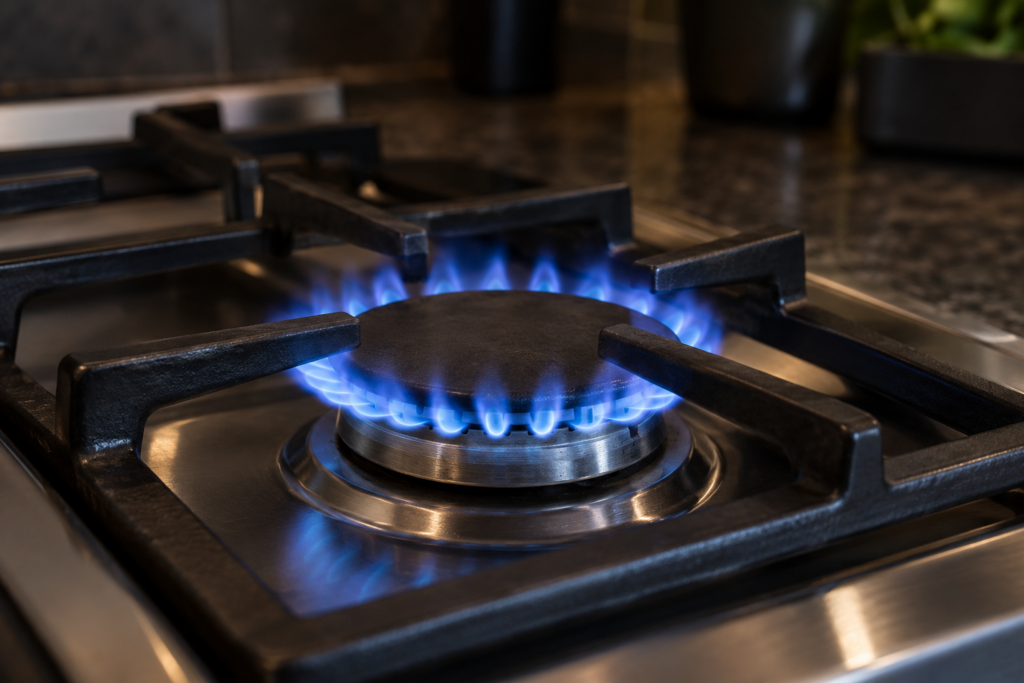
Four, according to the site: yellow or orange flames, soot, condensation and symptoms. A healthy burner flame is steady and blue, so a flame that turns yellow or orange, or that leaves soot or black marks around the burner, is the clearest visual sign that something is wrong with the burn.
- Flame color — yellow or orange instead of a steady blue, on one burner or on all.
- Soot or black marks — forming around the burners or on the cookware bottoms.
- Window condensation — excessive moisture on the windows while the range is in use.
- How you feel — unexplained headaches, dizziness or nausea that appear when you cook and fade when you leave the kitchen.
The last sign is the one people miss, because it feels like fatigue or a bug. A pattern, symptoms that arrive with cooking and ease with fresh air, is worth taking seriously, and it is worth mentioning to a doctor as well as to a technician.
What Should You Do if a CO Alarm Sounds While You Cook?
Turn the range off, get everyone into fresh air and do not use it again until a technician has cleared it. The site's notice says that any yellow or orange flame pattern, any sooting and any CO alarm activation requires immediate professional service, and that you should switch the range off, ventilate and call. If anyone has symptoms, leave the house and call emergency services rather than trying to find the cause yourself.
- Turn off every burner and the oven. Do not keep cooking to finish a meal.
- Open doors and windows and get outside. People with symptoms go first.
- Call emergency services if anyone feels unwell. A detector alarm with symptoms is not a nuisance.
- Keep the range off until it is checked. Book through the service link below, and tell us what the flames looked like.
Detector Placement and Care
The detector is the only defence against a gas you cannot sense, so its placement and upkeep matter as much as the range does. The site recommends a combination smoke and CO detector within about 10 feet of the kitchen, mounted on an adjacent wall rather than directly above the range, tested monthly, with its batteries replaced yearly. It also advises replacing the whole unit every seven years, whatever the battery status, so check the date printed on yours and the maker's own instructions, which govern.
- Test it every month — press the test button and confirm the alarm sounds.
- Replace the batteries every year — on a fixed date, such as a clock change.
- Replace the whole unit at the end of its life — the site says seven years, and the label on the detector is the final word.
- Keep one near sleeping areas too — the kitchen is not the only place gas can reach.
Burner Care That Keeps Flames Blue
The preventive work is plain housekeeping. Wipe spills before they bake onto the burner heads, keep the burner caps and grates seated as they came, and run the range hood while cooking. Burner caps and grates are user-replaceable parts on Kenmore gas cooktops, so a warped or cracked cap can be swapped for a new one. Our Kenmore range maintenance and Kenmore range hood maintenance guides cover the routine, and the Kenmore range safety guide is the wider overview.
A short routine keeps the burn clean between service visits:
- Wipe spills right away — baked-on food is what clogs the small ports around a burner head.
- Seat the caps and grates properly — a cap sitting crooked changes the flame, so check after every cleaning.
- Look at the flame, not just the food — a quick glance at the color each time you light a burner takes seconds.
Do not confuse a combustion problem with an ignition one. A burner that clicks but will not light, or an oven that fails to ignite, is a different fault; see cooktop burner won't light and range Er ES. Those leave the gas unburned, and they call for the gas safety steps in the range safety guide.
Getting the Range Checked
A technician inspects burner alignment, orifices and flame pattern, and clears the range for use or repairs it. Our Kenmore range repair service covers gas ranges, and the site's own Kenmore gas range carbon monoxide safety notice has the full advisory. Tell us the model, what the flames look like and whether anyone has felt unwell when cooking. Schedule a visit or contact us. The final price is confirmed after on-site diagnosis, with a written estimate before any work begins.