 Michael Turner
Key Takeaways
- Frost-free uprights without a control board give no code, so the frost itself is the warning.
- A failed defrost heater, thermal limiter or thermostat makes frost return within two to four weeks of a defrost.
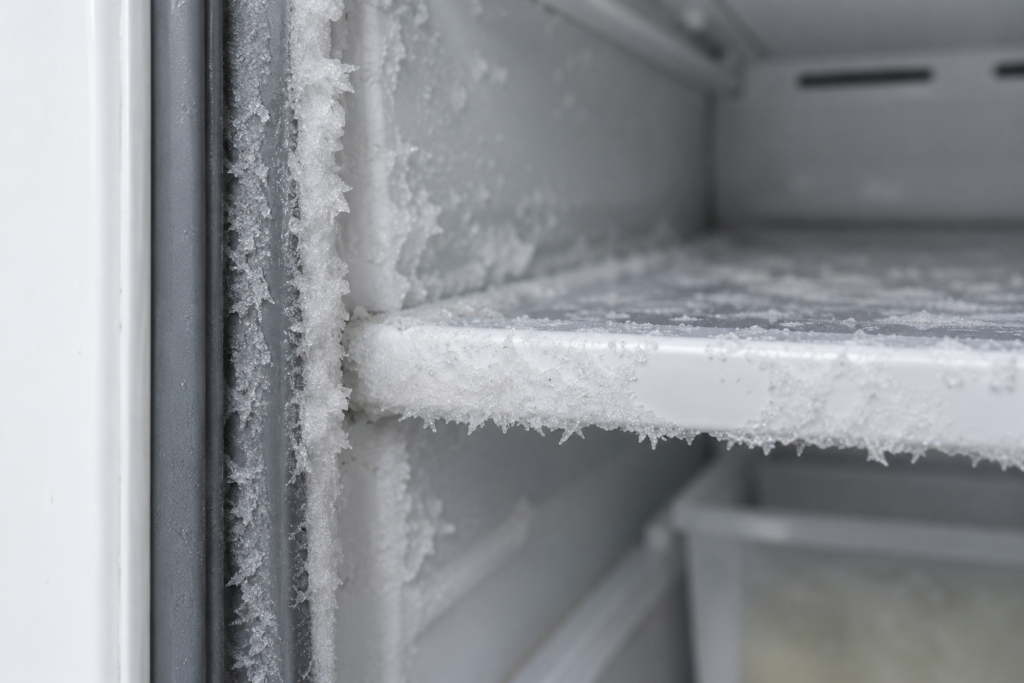
- A leaking gasket grows frost slowly along the door edge and the top of the cabinet.
- Never chip frost off with a sharp tool, because a punctured liner turns a defrost into a refrigerant repair.
- Frost back to a quarter inch within two weeks of a full defrost points to the defrost system.
The Bottom Line
Do a full manual defrost, check the door gasket, then note how fast the frost returns. If it is back within a few weeks, the defrost system needs a technician.
A frost-free upright freezer is supposed to look clean inside. When the back wall turns white, the shelves grow a fur of ice and the door starts to catch on it, something in the automatic defrost chain or in the door seal has stopped doing its job. Kenmore upright freezer frost buildup is also easy to misread, because many of these freezers have no display and therefore no code to tell you what failed. This guide separates the three causes the site lists, shows how the timing of the frost points to one of them, and explains what you can safely do before a technician is needed. If your freezer is a manual-defrost chest model, our freezer frost buildup page covers that case.
| What the frost looks like | Most likely cause | Home check | Fix |
|---|---|---|---|
| Heavy frost on the back wall, returns within two to four weeks of a defrost | Defrost heater, thermal limiter or thermostat has failed | Full manual defrost to confirm the pattern | Technician, replace the failed part |
| Frost along the door edge and the top shelf | Door gasket leaking warm, humid air | Dollar bill test around the door | New gasket |
| Frost on the evaporator cover and a scraping noise from the fan | Defrost failure with the fan hitting ice | Listen with the door closed | Technician |
| Light frost that clears at the next defrost cycle | Normal | None | None |
| Frost after a door was left open | Humid air let in once | Defrost and check the door closes | None |
Why Does My Kenmore Upright Freezer Keep Frosting Up?
Almost always because the automatic defrost has quietly failed or because the door seal lets in humid air. The site lists a failed defrost heater or thermal limiter on a frost-free upright first, and a torn, compressed or misaligned gasket as the other cause that applies to every Kenmore freezer.
The reason you may see no warning is that frost-free uprights without electronic control boards cannot display a code. The page for this symptom notes that the first visible sign is usually frost around the rear vent slots, or an evaporator fan that starts to scrape. Frost then acts as insulation on the evaporator coil, so the cabinet warms a few degrees even though the compressor keeps running.
- Defrost heater or thermal limiter — the heater melts frost off the coil on a schedule, and a burnt-out heater or a blown limiter stops the cycle without an alarm.
- Defrost thermostat — the control that ends the cycle, listed with the heater and limiter as parts to inspect.
- Door gasket — frost that builds along the seal first points here, and a leaking seal is more damaging on a freezer than on a refrigerator.
- Frost thicker than a quarter inch — the site's threshold at which frost starts to cost storage space and efficiency.
How Do I Defrost an Upright Freezer Safely?
Empty the freezer into coolers, unplug it, leave the door open with towels at the base and wait until every bit of frost has melted, which the site gives as typically 8 to 24 hours. Then wipe the interior dry, inspect the door gasket and restore power.
Never chip frost off with a sharp tool. The liner is thin, and the site warns that one slip can puncture the tubing behind it and turn a defrost into an expensive refrigerant repair. A plastic scraper is not worth the risk either; patience works better than force.
- Move food to a cooler with ice. Keep it cold, because a long defrost can thaw a full freezer.
- Unplug the freezer. Never use a heat gun or hair dryer near the liner or coils.
- Catch the melt water. Towels and shallow pans at the base keep the floor dry.
- Dry and inspect. Wipe the interior dry and check the gasket for tears, compression or missing sections before powering up.
Does the Timing of the Frost Tell Me the Cause?
Yes, and it is the most useful test you have. After a full defrost, note how long it takes for frost to return. The site's guidance is that on a frost-free upright the frost will reappear within two to four weeks if the heater, limiter or thermostat is not replaced, and that frost back to a quarter inch within two weeks of a complete defrost points to a defrost system failure.
A gasket problem behaves differently. The frost grows gradually and unevenly, thickest along the door edge and near the top where warm air enters, and it improves after the gasket is replaced. A freezer that frosts only after a party, a power cut or a door left ajar has nothing broken at all.
- Back wall frost, back within weeks — defrost system, so book service.
- Frost by the door, builds slowly — gasket, so test the seal and replace it if it fails.
- Cabinet above 10°F after a full defrost — the site suggests a compressor or gasket issue as well, which needs a technician.
What Can I Do to Keep Frost From Coming Back?
Keep the seal clean and the door shut, and do not let humid air in. Our freezer maintenance guide recommends a monthly gasket check with a dollar bill, a standalone thermometer to confirm the freezer holds 0°F, clear space around the vents and keeping the freezer at least half full to steady temperature swings.
- Close the door fully. Check that nothing, such as a tall box, props it open.
- Wipe the gasket contact surface. Food and ice debris stop the seal from closing.
- Let hot food cool first. Warm, steaming food adds moisture that freezes onto the coil.
- Leave clearance behind the unit. The site asks for at least two inches on uprights with rear coils.
If the freezer will not hold its temperature at all, our freezer not freezing guide covers the cases beyond frost, and the freezer repair cost guide shows what each repair involves before you book.
Normal Frost and Problem Frost
A thin, dry film of frost near the evaporator that disappears at the next defrost cycle is normal, and so is a little frost after a door has been open for a while. What is not normal is frost that keeps growing, covers the back wall or the shelves, or stops the door from closing flush.
- Normal — light frost that clears by itself within a day or two of ordinary use.
- Watch — frost that appears after you have stocked a lot of warm food or left the door ajar.
- Not normal — frost thick enough to see through the rear vent slots, or a scraping sound from the fan.
- Urgent — a cabinet that will not stay cold, because the food inside is at risk.
If the freezer is full of food and the frost is heavy, plan the defrost for a time when you can move the contents, and do not leave the freezer unplugged longer than the food can stay cold.
Booking the Repair
Defrost heater, thermal limiter, thermostat and gasket work are all part of our Kenmore freezer repair service. Tell us the model number, how many weeks the frost took to return and where it is thickest. Schedule a visit or contact us. The final price is confirmed after the on-site diagnosis, with a written estimate before any work begins.