 Michael Turner
Key Takeaways
- A series name does not tell you who built a Kenmore washer, but the digits before the decimal point in the model number do.
- Whirlpool direct-drive top-loaders favor repair through 15 years or more, and HE front-loaders through about 10 or 11.
- Pumps, lid switches and door seals are worth fixing on washers under about 11 years old.
- Drum bearings and control boards are the borderline repairs on a front-load machine.
- A second major failure within a year, or a bearing failure on an old machine, points towards replacement.
The Bottom Line
Identify the maker from the model prefix, then weigh the failed part against the age. Under about 11 years, most single faults are worth repairing.
People search for a Kenmore 90 series washer, and then wonder why no two answers agree. The reason is that Kenmore was a store brand. It sold machines made by other manufacturers under one badge, so a series number on the lid or in a listing says little about what is inside, and the repair outlook depends entirely on who made the machine. This guide shows how to find that out in a minute, what the site's repair rules say for each maker, and when a washer from this family stops being worth fixing. It is a narrower companion to our general guide on whether a Kenmore washer is worth repairing.
| Model prefix | Built by | Type | Repair outlook on this site |
|---|---|---|---|
| 110.xx | Whirlpool | Direct-drive top-load | Favorable under 18 years |
| 110.xx | Whirlpool | HE front-load | Favorable under 11 years |
| 796.xx | LG | HE front-load | Favorable under 10 years |
| 417.xx | Frigidaire or Electrolux | Front-load or top-load | Favorable under 11 years |
What Does 90 Series Mean on a Kenmore Washer?
It is a series label, and by itself it does not tell you who built the machine, so do not rely on it to decide anything. What our washer pages do use is the fact that the three digits before the decimal point in the model number identify the manufacturer, which is how repairs, parts and fault codes are matched.
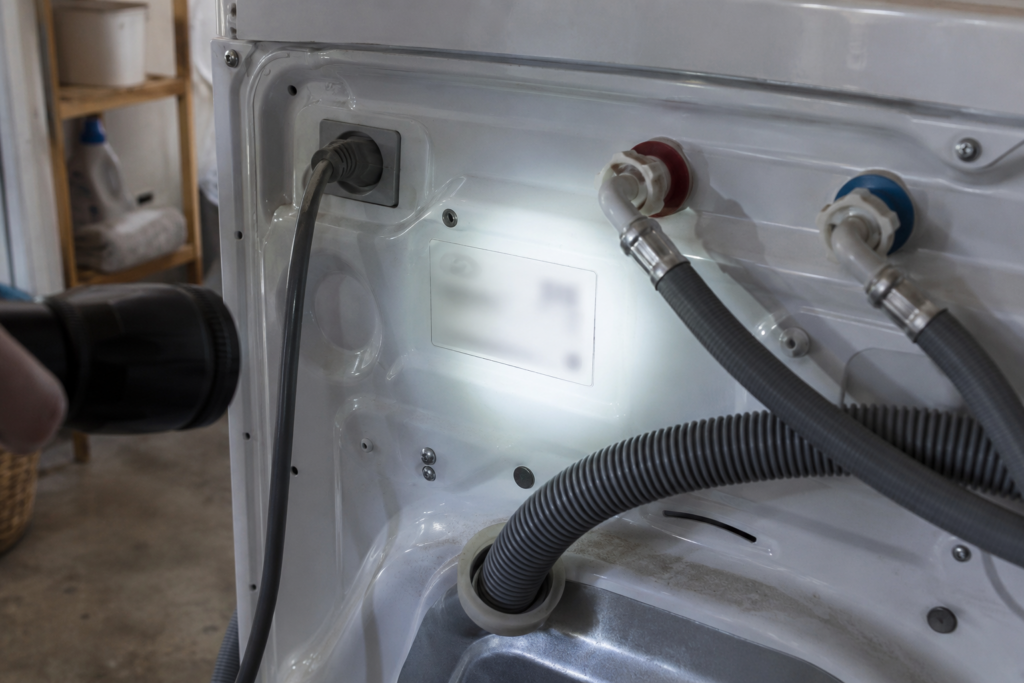
The model number sits on a rating plate, not on the front of the machine. On laundry it is under the lid, inside the door opening or on the back panel. Read the whole string, decimal point included, and photograph it. Our model prefix guide explains the lookup, and a washer you cannot identify is the one case where it is worth the five minutes before you spend anything.
Is a Kenmore 90 Series Washer Worth Fixing at Any Age?
Not at any age: around 11 years is the practical threshold on this site for most faults, because washers are expected to last 10 to 14 years. Whirlpool direct-drive top-loaders are the exception, since the site describes the platform as famous for longevity beyond 20 years when maintained, and the repair math usually favors repair through 15 years or more.
The newer HE and front-load machines carry more electronics and fewer repair-friendly years. For those, 10 to 11 years is the practical limit for a major repair. Age is the first filter, and the failed part is the second:
- Water pump, lid switch, door boot seal — worth doing on washers under 11 years old.
- Bearings and control board — the borderline repairs, with bearings starting from $280 on this site, worth doing on a front-load HE under 10 years old.
- LG-platform front-loaders — the site names a known drum bearing failure pattern, with parts available and the repair justified under 10 years.
- Several failures at once — on an older machine they point towards replacement.
Which Failures Make a Kenmore Washer Not Worth Fixing?
A failed drum bearing or control board on a machine past roughly 10 years, and any second major failure within a year, are the cases that usually tip the decision. A growl that builds through the spin cycle on a front-loader is the classic bearing sign, which our HE2 Plus washer bearing repair cost guide describes in detail.
Cheap faults should not be mistaken for expensive ones. A washer that will not spin, drain or fill is often a lid switch, a pump or a blocked filter, and the site's washer pages treat those as ordinary repairs. Before writing a machine off, rule out the cheap suspects:
- Read the code. Washer codes such as washer F21, a drain fault, point at a pump or filter before they point at the drum.
- Clean the pump filter. On front-load machines it sits behind a small door at the lower front, and a clogged one causes slow drain and eventual pump failure.
- Check the level. A machine that walks across the floor is stressing its bearings, and our washer maintenance guide covers leveling.
- Note the age and the platform. They decide whether a major repair has a future.
What About Parts and Repairs on an Older Machine?
Parts are less of a problem than owners fear. The site's washer guides say Kenmore washers are Whirlpool, LG or Frigidaire-built machines with the best aftermarket parts supply of any Kenmore category, so the Sears bankruptcy matters less for laundry than for other appliances. The question is the economics of the repair, not whether the part exists.
A short rule keeps the decision clean. Repair when the failed part is a pump, switch, seal or similar and the machine is under about 11 years old. Compare replacement when the failure is the drum bearing or the board and the machine is already at or beyond that age. Our washer repair or replace guide goes through the replacement side.
Before You Decide
Do the free work first, because a surprising share of washer faults turn out to be small. A short routine takes minutes and may save the visit.
- Photograph the rating plate — the model and serial number are the starting point for every lookup.
- Note the exact symptom — does it not fill, not drain, not spin, leak or growl in the spin?
- Write down any code — the display code narrows the fault faster than the series name.
- Estimate the age — the serial number or the purchase receipt gives the date.
With those four facts in hand, you can compare the machine's age against the repair outlook in the table above and see on which side of the line you stand. A machine that is clearly on the right side of the line, with a cheap fault, needs no further analysis. A machine that sits near the line is the one worth a diagnostic visit before any decision, because the visit, which also settles which maker built the machine and how old it is, turns a guess about the failed part into a finding and gives you a written number to weigh against a new machine.
How to Get a Firm Answer
A diagnostic visit settles the platform, the age and the failed part in one visit, so you pay for a decision rather than a guess. The technician tests the suspected component, explains the finding and gives a written estimate that lists parts and labor. If you decide not to proceed, only the diagnostic fee applies.
Bring the model number from the rating plate, the symptom and any code, because they let the right parts travel with the technician. Laundry repairs are part of our Kenmore washer repair service. Schedule a visit or contact us. The final price is confirmed after the on-site diagnosis, with a written estimate before any work begins.